One of the most compelling aspects of Hellsing is not its explosive violence or iconic vampire battles, but its relentless exploration of the fragile boundary between humanity and monstrosity. Created by Kouta Hirano, Hellsing challenges traditional moral binaries by asking an uncomfortable question: what truly separates humans from monsters? Rather than offering clear answers, the series deliberately blurs this line, forcing viewers to confront the darkness within both sides.
Monsters Who Were Once Human
At the core of Hellsing’s narrative is the idea that monsters are not born—they are made. Vampires, ghouls, and abominations throughout the series all originate from humans who surrendered their humanity for power, immortality, or survival. This transformation is rarely portrayed as liberation; instead, it is shown as a tragic loss of identity.
Characters who become vampires often cling to remnants of their former selves, yet are slowly consumed by bloodlust and despair. Through this lens, Hellsing presents monstrosity as a consequence of choice rather than nature, emphasizing personal responsibility in moral collapse.
Humans Capable of Inhuman Cruelty
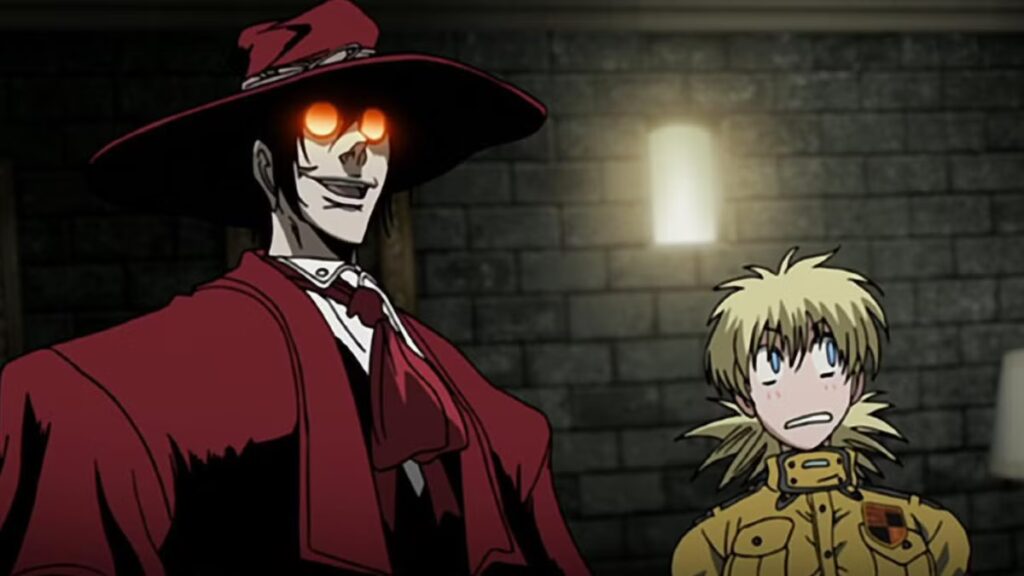
While monsters were once human, Hellsing also demonstrates that humans are fully capable of monstrous behavior. Organizations such as Millennium and even religious factions like Iscariot commit acts of extreme violence, genocide, and fanaticism—all justified by ideology.
These characters act without supernatural influence, driven purely by belief systems, nationalism, or faith. By portraying humans as architects of mass suffering, Hellsing dismantles the notion that humanity is inherently virtuous. In many cases, the cruelty of humans surpasses that of vampires.
Alucard: The Ultimate Paradox
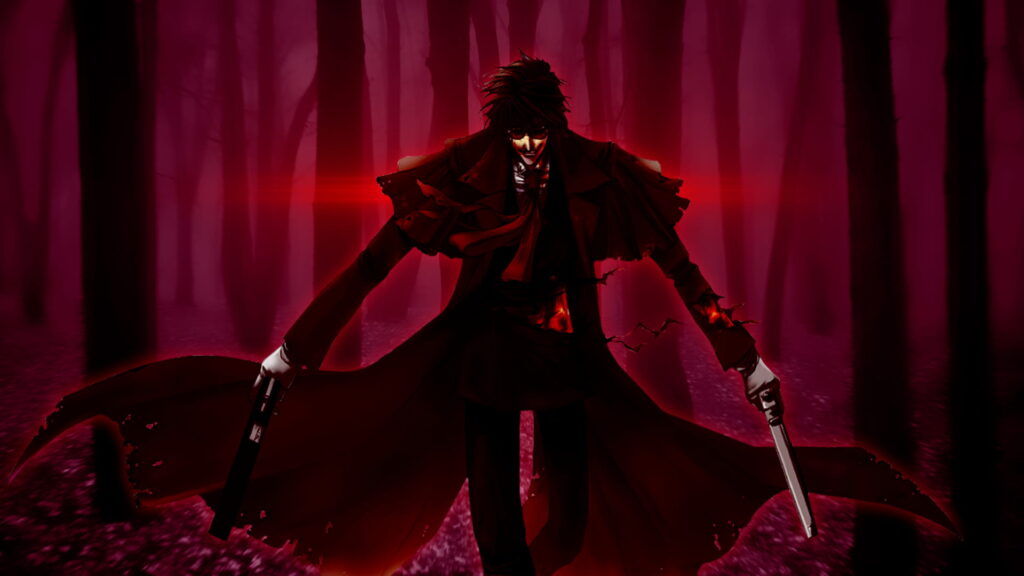
Alucard embodies the ultimate contradiction between human and monster. As an immortal vampire with overwhelming power, he is undeniably monstrous. Yet he possesses a strict moral code and openly despises those who abandon their humanity for power.
Alucard’s contempt for weak-willed vampires reveals one of Hellsing’s central philosophies: being a monster is not defined by form, but by mindset. He respects humans who fight with conviction, even when they are powerless, while scorning monsters who exist only to dominate.
This paradox positions Alucard as both judge and executioner—a creature who understands humanity precisely because he has lost it.
Seras Victoria and the Loss of Innocence
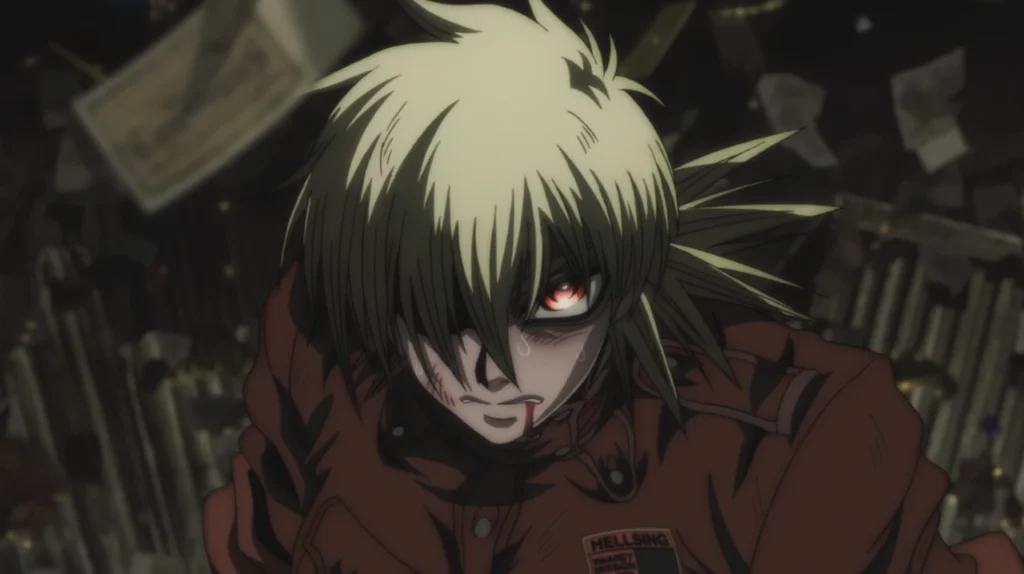
Seras Victoria’s journey offers a more emotional exploration of the human–monster divide. Initially a human police officer, Seras becomes a vampire against her will. Unlike Alucard, she struggles with guilt, fear, and denial.
Her transformation is gradual, reflecting the psychological cost of becoming something inhuman. Seras’ arc emphasizes that retaining humanity is an active struggle, not a passive state. Her compassion and empathy are what distinguish her from true monsters, even as her body changes.
Through Seras, Hellsing suggests that humanity is defined by values, not biology.
Faith, Fanaticism, and Moral Absolutism
Religion plays a crucial role in Hellsing’s examination of monstrosity. Characters like Alexander Anderson see themselves as righteous instruments of God, yet commit brutal acts without mercy. Their unwavering belief allows them to dehumanize others, turning moral certainty into a weapon.
This portrayal criticizes blind faith and moral absolutism, showing how humans can justify monstrous actions when convinced of their own righteousness. In contrast, characters who question themselves are often portrayed as more human—even when flawed.
War as the Ultimate Dehumanizer
The influence of war, particularly through Millennium’s Nazi ideology, reinforces the theme that large-scale violence erodes humanity. Millennium seeks endless war not for victory, but for meaning. Their desire to fight eternally reflects a nihilistic worldview where destruction replaces purpose.
War in Hellsing strips individuals of identity, turning both humans and vampires into tools of annihilation. This reinforces the idea that monstrosity emerges when life loses its inherent value.
Humanity as a Choice, Not a State
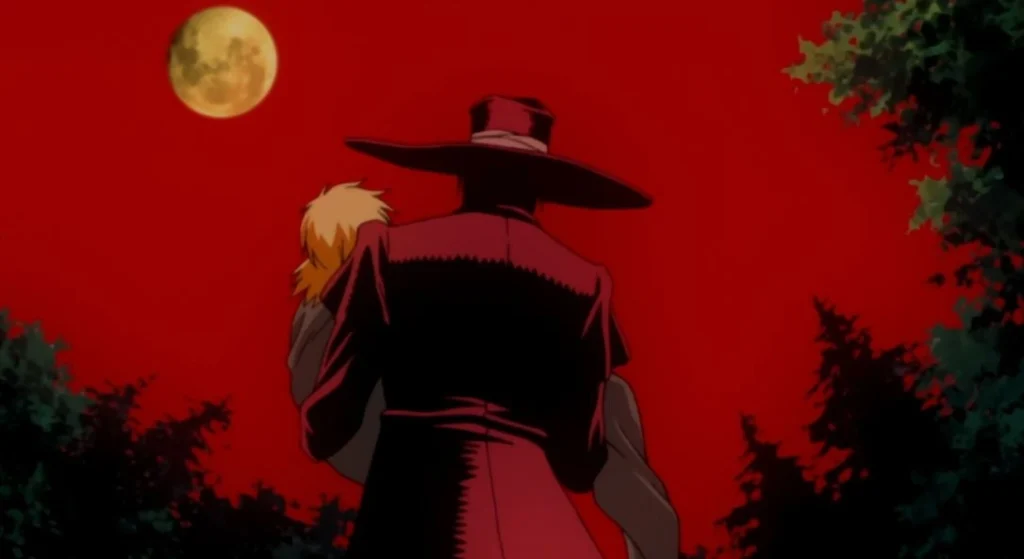
Perhaps Hellsing’s most powerful message is that humanity is not something one simply possesses—it is something one must choose. Characters who cling to dignity, self-awareness, and restraint are portrayed as human, regardless of their species. Those who abandon conscience and empathy become monsters, even if they remain biologically human.
This perspective challenges viewers to reflect on their own definitions of morality and power.
Why This Theme Defines Hellsing
The blurred line between humans and monsters is what gives Hellsing its lasting impact. Rather than offering comfort, the series confronts viewers with uncomfortable truths about violence, authority, and personal responsibility. It refuses to simplify evil, instead presenting it as a spectrum shaped by choices.
This moral ambiguity is what elevates Hellsing beyond a typical action-horror anime into a philosophical exploration of identity and power.
Final Thoughts
Hellsing does not ask whether monsters can become human—it asks whether humans can avoid becoming monsters. Through complex characters, ideological conflict, and brutal storytelling, the series exposes the thin, fragile boundary separating humanity from monstrosity.
In the world of Hellsing, fangs and immortality do not define evil. Choices do.
👉 If you are a fan of Hellsing and its dark exploration of the line between humans and monsters, exploring official-inspired apparel and collectibles is a great way to express that passion. Visit hellsingmerch.com to discover exclusive Hellsing merchandise that captures the series’ iconic characters, gothic style, and haunting atmosphere.
